

Documented long-term nervous system change
Structured shifts observed across long-term clients working with complex trauma.
The following patterns are drawn from long-term clinical work with adults presenting with complex trauma and chronic nervous system dysregulation.
Changes are observed over time through shifts in regulation, behaviour, relational stability, and reduced reliance on therapy.
Individual experiences differ, but the structural patterns are consistent.
Many of these clients worked with me for 6–24 months, with sessions decreasing in frequency as capacity increased.
Before:
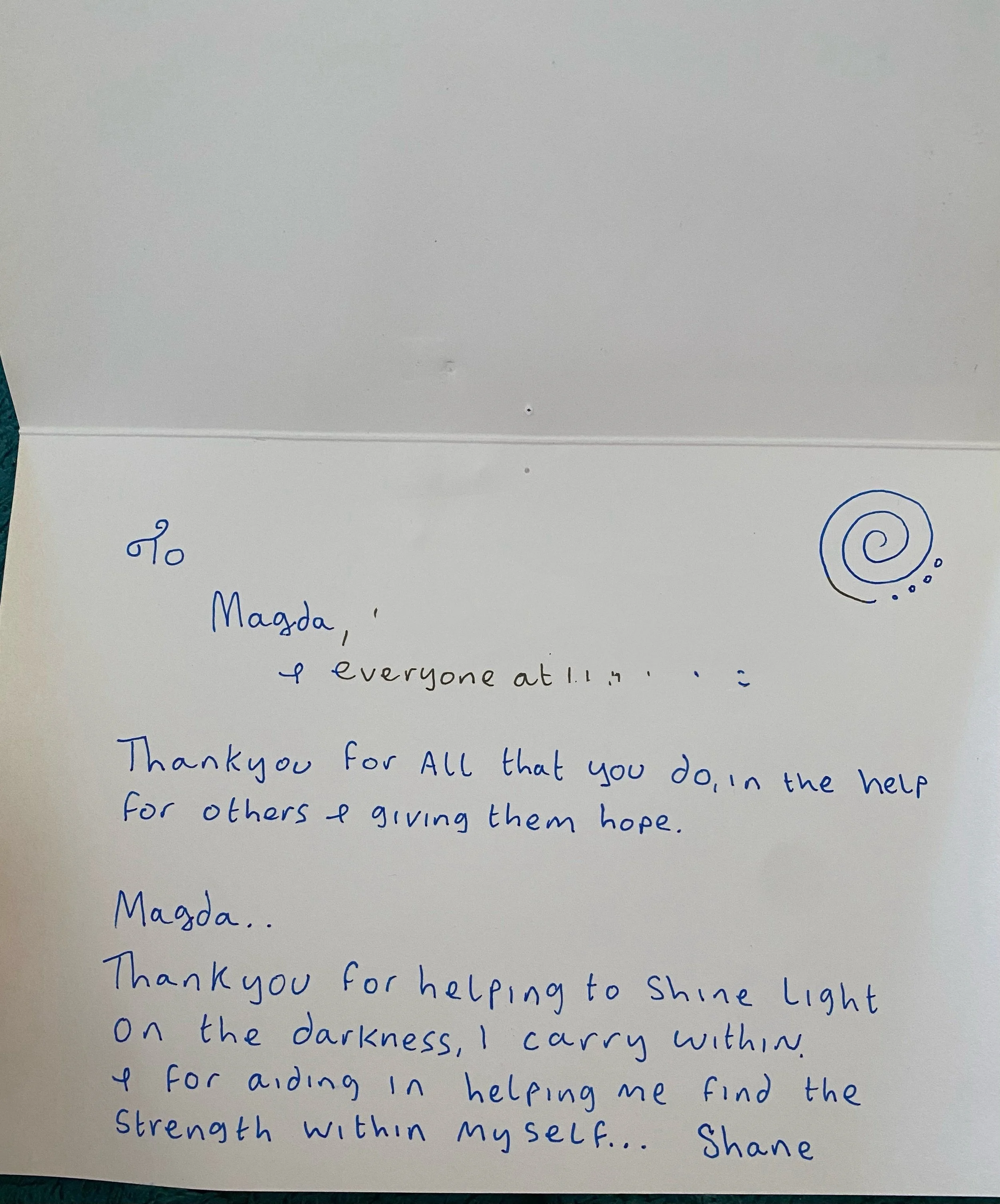
Living in emotional disorientation and anger, feeling lost in the world and disconnected from safe, sustaining relationships.
Carrying pain alone, with limited internal resources to navigate adversity, and relying heavily on therapy as the primary place of support and hope.
After:
Developed sustained nervous system stability, increased behavioural flexibility, and tools implemented independently beyond sessions.
Built the capacity to form and maintain healthy relationships in real life.
Moved from survival and despair into self-trust, relational agency, and a grounded sense of direction.

Before:
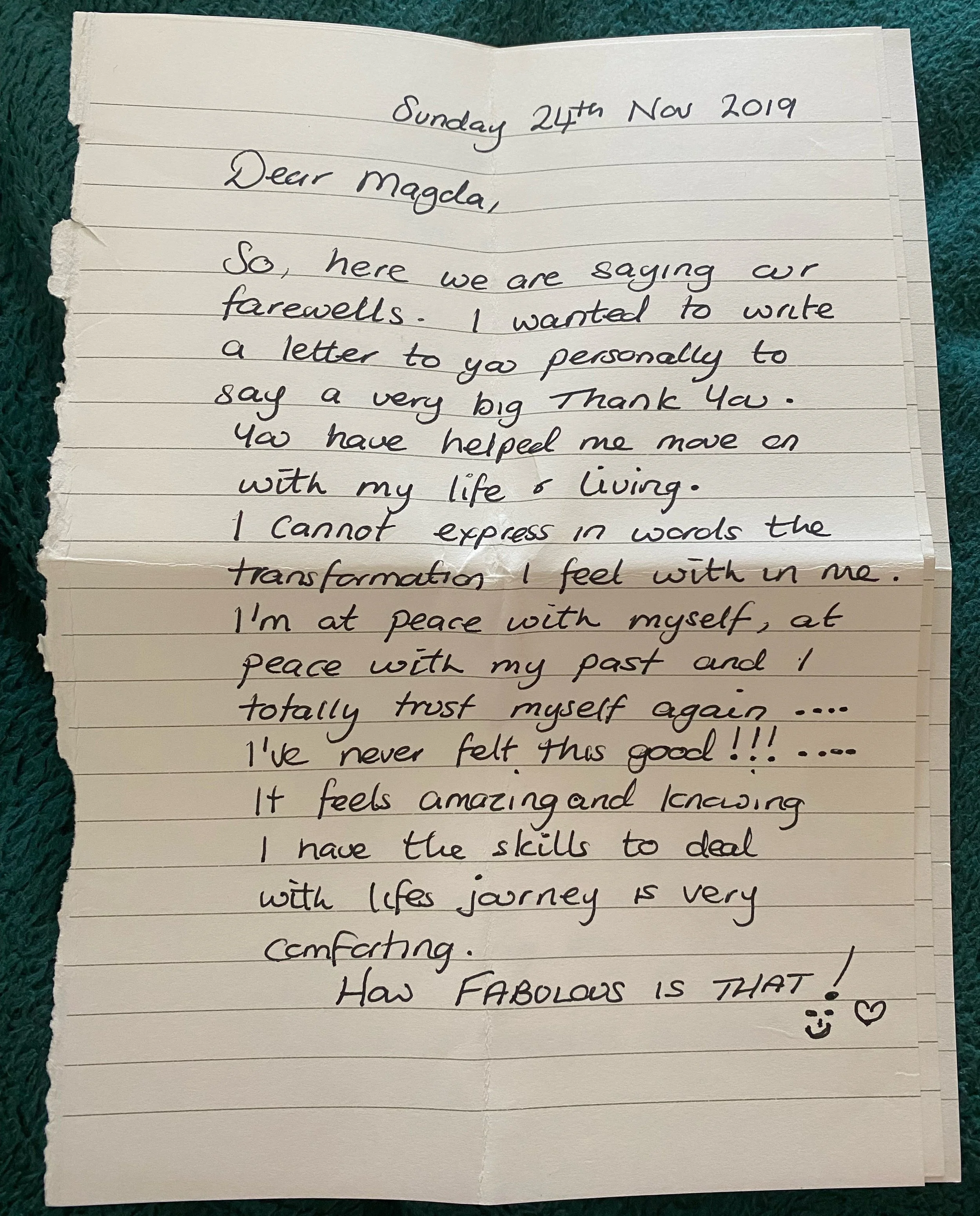
Reliant on external support to regulate emotions and make decisions.
After:
Greater internal regulation, independence, and confidence in handling life without constant therapeutic input.
Before:
Living in ongoing hypervigilance, emotional exhaustion, and confusion despite trying “all the right things.”
After:
Increased nervous system stability, improved self-trust, and measurable changes in daily functioning.

Before:
Years of therapy with insight but limited real-life change.
After:
Clear nervous system shifts, practical tools, and lasting changes that reduced the need for ongoing sessions.

Before:
Highly capable, intellectually aware, but emotionally overwhelmed and stuck in chronic stress responses.
After:
Improved autonomic regulation, restored decision-making capacity, and reduced emotional reactivity.

Before
High-functioning, anxious, and stuck in survival patterns despite years of insight and therapy.
After
Reduced baseline arousal, improved executive functioning, and measurable behavioural follow-through.
Before:
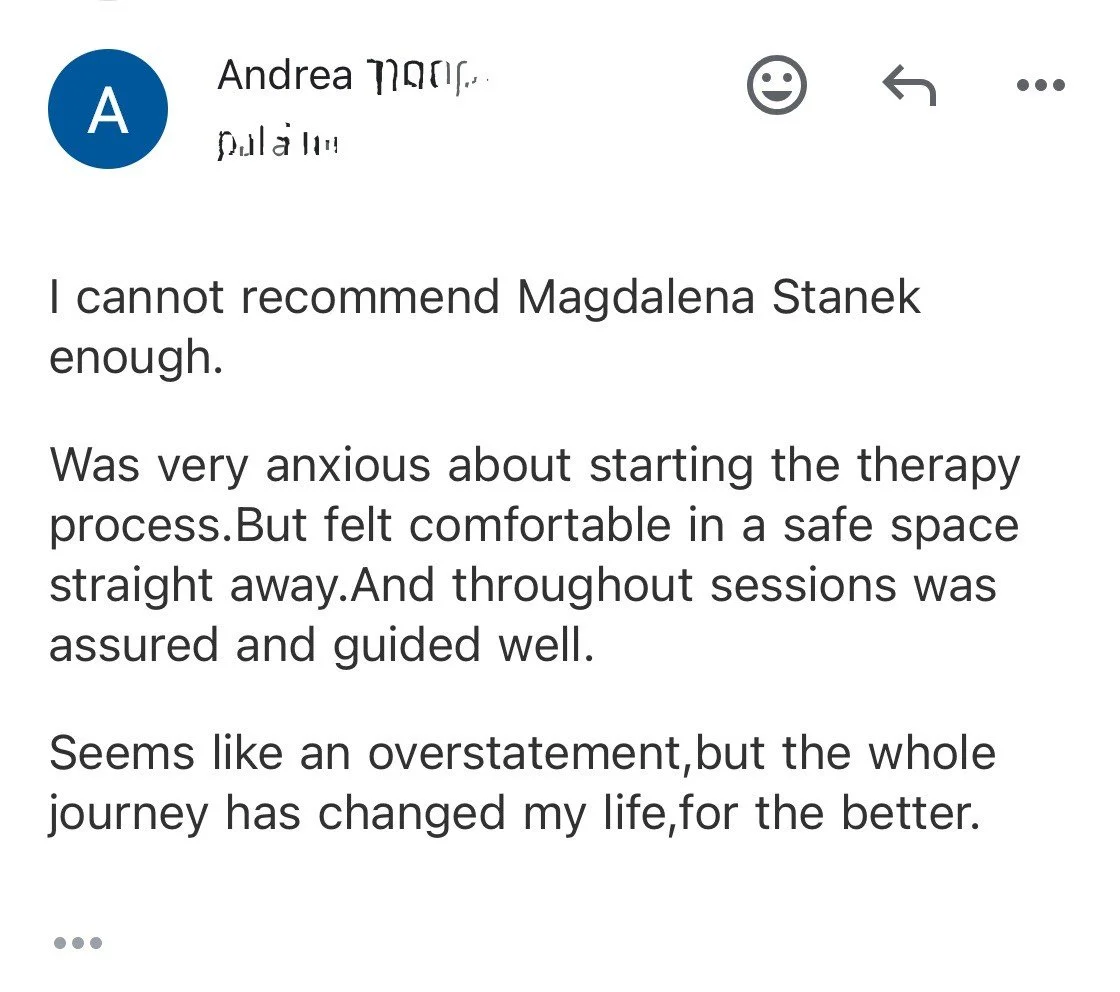
Overthinking, second-guessing, and difficulty making decisions without anxiety or external reassurance.
After:
Clearer thinking, faster decision-making, and confidence acting without mental spirals.
Before:
Difficulty trusting oneself, one’s feelings, or one’s judgments despite high competence.
After:
Restored self-trust, internal authority, and confidence grounded in bodily regulation.

Before:
A persistent belief that something was fundamentally wrong or broken.
After:
Understanding emotional patterns as biological responses, removing shame and self-blame.

Before:
Fear and instability during major life or career transitions.
After:
Increased resilience, adaptability, and the ability to navigate change without collapse.

Before:
Chronic stress, emotional fatigue, and a sense of always being “on edge.”
After:
Sustained calm, improved energy, and a nervous system no longer running in emergency mode.

Before:
Feeling emotionally flooded, reactive, or “too much” in everyday situations.
After:
Emotional signals became manageable, informative, and no longer overwhelming daily life.

Before:
Difficulty setting boundaries, managing stress at work, and feeling safe in relationships.
After:
Improved relational clarity, stronger boundaries, and the capacity to stay regulated in demanding environments.

Common longitudinal outcomes observed:
Reduced hypervigilance and emotional flooding
Increased capacity for delayed response instead of reaction
Clearer decision-making without external reassurance
Strengthened relational boundaries
Fewer sessions required over time